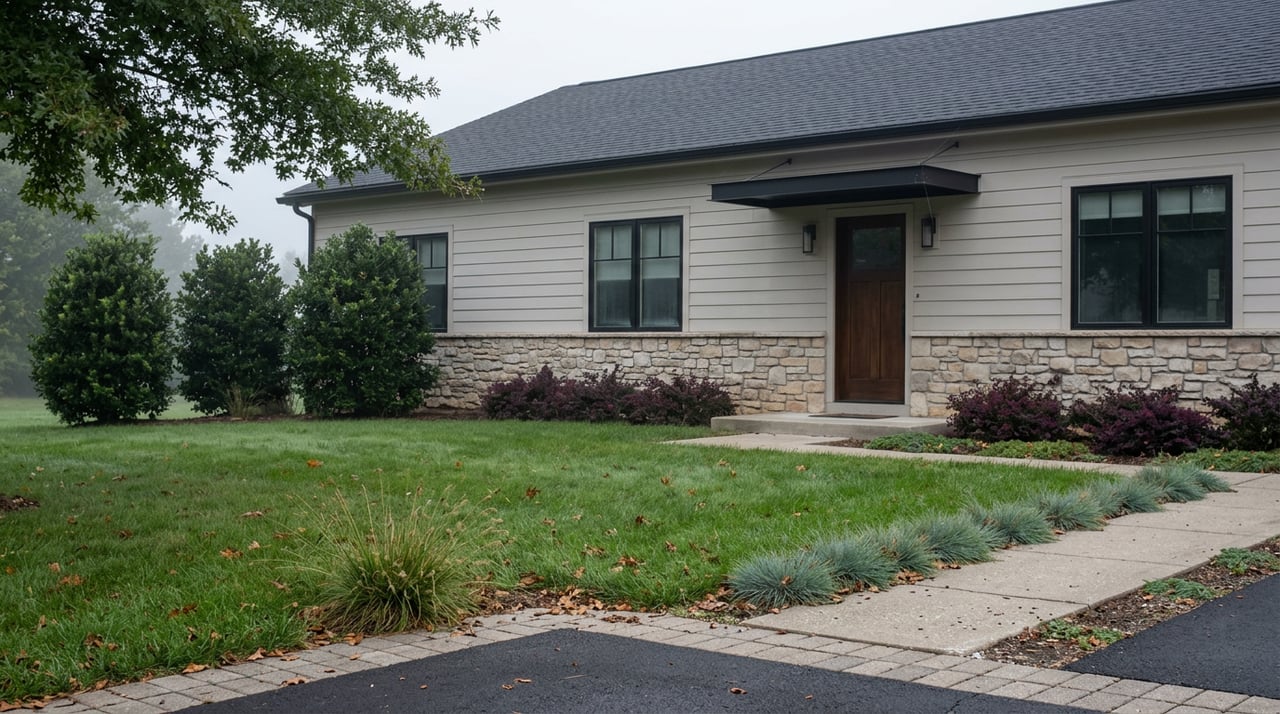
For years, a homeowner in Denver, North Carolina could stand at the edge of their yard and, without knowing it, be standing on one side of an invisible line that cost them money. Walk 1,000 feet toward Lake Norman, a hydrant, or a certified water point, and you crossed into a better fire insurance classification. Stay on the other side of that line, and the district rated your home worse for reasons that had nothing to do with the house itself.
That line is gone now. The Denver Volunteer Fire Department's entire district was reclassified to a flat "Straight 2" rating under North Carolina's Response Rating System, replacing what had been a 3/9 split for years. If you're comparing Denver to other Lake Norman towns right now, or comparing one Denver subdivision to another, this is the kind of detail that doesn't show up on a listing sheet and rarely comes up until closing week.
What the Old Line Actually Did
The mechanics were simple, and they were spatial. Under the previous system, any structure within 1,000 feet of a recognized fire hydrant, a certified water point, or the Lake Norman shoreline itself earned a Class 3 rating. Everything else in the district, regardless of how new the roof was or how well-built the home, fell into Class 9. On the 1-to-10 scale fire departments are graded on, lower is better. A Class 9 sits close to the bottom, just above being classified as unprotected.
That meant two homes built the same year, by the same builder, a half-mile apart, could carry meaningfully different fire protection classifications purely because one happened to sit near water and the other didn't. A buyer looking at an interior lot in a neighborhood like Killian's Pointe was, without realizing it, taking on a classification disadvantage that a buyer looking at a home near the shoreline in a community like Westport or Governor's Island simply didn't have.
What Changed
The Denver Volunteer Fire Department now reports that everyone who owns land within the Denver Fire District carries a Class 2 rating, regardless of proximity to water. The department's own public accounting of the change calls it a significant improvement over the old split system, and it effectively erases the geographic penalty that used to separate lakeside Denver from inland Denver.
The rating itself comes from the North Carolina Response Rating System, a program run by the Office of the State Fire Marshal that grades departments on four components: emergency communications, the fire department's own equipment and staffing, water supply capability, and community risk reduction. The state built NCRRS to mirror the older, more familiar ISO Public Protection Classification system that insurers have used for decades, so the underlying logic is the same even though North Carolina now runs its own version.
What a Fire Rating Actually Buys You
A fire rating is not a guarantee of a specific premium. Insurers weigh it differently, and the exact discount, if any, depends on the carrier writing the policy. What the rating measures is more concrete: how quickly and effectively a fire department can respond to and suppress a structure fire in a given area, based on staffing, apparatus, dispatch infrastructure, and available water supply.
What matters for a Denver buyer is that this measurement used to depend heavily on where in the district your address sat. Now it doesn't. Every parcel inside the Denver Fire District is being assessed against the same, better baseline.
Why This Matters If You're Comparing Neighborhoods
Denver's housing stock spans a wide range of settings within a fairly compact fire district. Trilogy Lake Norman and Covington at Lake Norman sit inland, built around amenity centers and interior streets rather than direct water frontage. Killian's Pointe is a newer development off the district's main corridors. On the other end, communities like Westport, Sailview, Eastwind Cove, and Governor's Island sit closer to the shoreline, some with direct water access and boat slips.
Under the old 3/9 split, the interior communities carried the worse classification by default, simply by virtue of distance from a hydrant, water point, or the lake's edge. That distinction is no longer part of the picture. A buyer weighing an inland lot in Trilogy against a near-water lot in Sailview is now comparing those two properties on their actual merits, price, lot size, proximity to amenities, rather than on a fire protection gap that used to exist between them.
This is worth knowing before you fall in love with a listing based on its distance to the water. The insurance-classification argument for paying a premium to be near the shoreline just got weaker in Denver. It hasn't disappeared as a lifestyle preference, but it's no longer backed by a protection-class difference the way it used to be.
The Timing Behind This
Denver's for-sale market had room to breathe earlier this year. Between mid-January and mid-April 2026, the town carried around 173 active single-family listings, with homes taking an average of 83 days to sell and closing at roughly 2 percent below list price. That's a market where buyers have time to ask questions before writing an offer, and where sellers in interior neighborhoods no longer have to overcome a classification disadvantage that near-water listings didn't share.
If you're weighing Denver against a town like Huntersville, Cornelius, or Mooresville, keep in mind that those towns run their own municipal fire departments, which are rated separately from Denver's volunteer district. A property just across a town line can sit under a completely different fire protection classification, so this isn't a reason to assume one town is uniformly better protected than another. It's a reason to ask the specific question about the specific address, every time.
What to Actually Verify Before You Write an Offer
- Ask your insurance agent for a quote that reflects the current Class 2 rating, not an older figure some carriers may still have on file
- Get quotes from at least two carriers, since the weight each one places on the fire rating varies
- Confirm this is a fire protection classification, separate from flood insurance, which lake-adjacent Denver properties may still need depending on their elevation and proximity to the water
- If you're comparing a Denver property to one across the line in Huntersville, Cornelius, or Mooresville, ask about that town's specific municipal fire rating rather than assuming it matches Denver's district-wide number
FAQ
Does the new Class 2 rating apply to flood insurance too? No. This classification covers fire protection response and equipment, and it's a separate system from flood zone determinations. A home near Lake Norman can carry the same Class 2 fire rating as an inland home and still require flood insurance depending on its elevation and FEMA zone.
How do I find my exact rating in Denver? The Denver Volunteer Fire Department publishes its current classification directly, and the Office of the State Fire Marshal maintains statewide ratings information that insurance agents reference when writing policies.
Does a Class 2 rating guarantee a lower premium than I'd pay elsewhere? Not automatically. Every insurer weighs the rating differently, and other factors like the home's age, construction, and your coverage choices still matter. The rating is one input among several, not a fixed discount.
Whether you're weighing a lakeside lot against an interior neighborhood, or comparing Denver to another corner of the Lake Norman map entirely, the details that actually move your numbers rarely show up in a listing description. Good Fortune Homes tracks changes like this one across Lake Norman, Huntersville, Mooresville, and the towns around them, in English and in Spanish, so you're working from the full picture before you make an offer. Request your free home valuation and let's talk through what a specific address in Denver actually costs to protect and to own.
