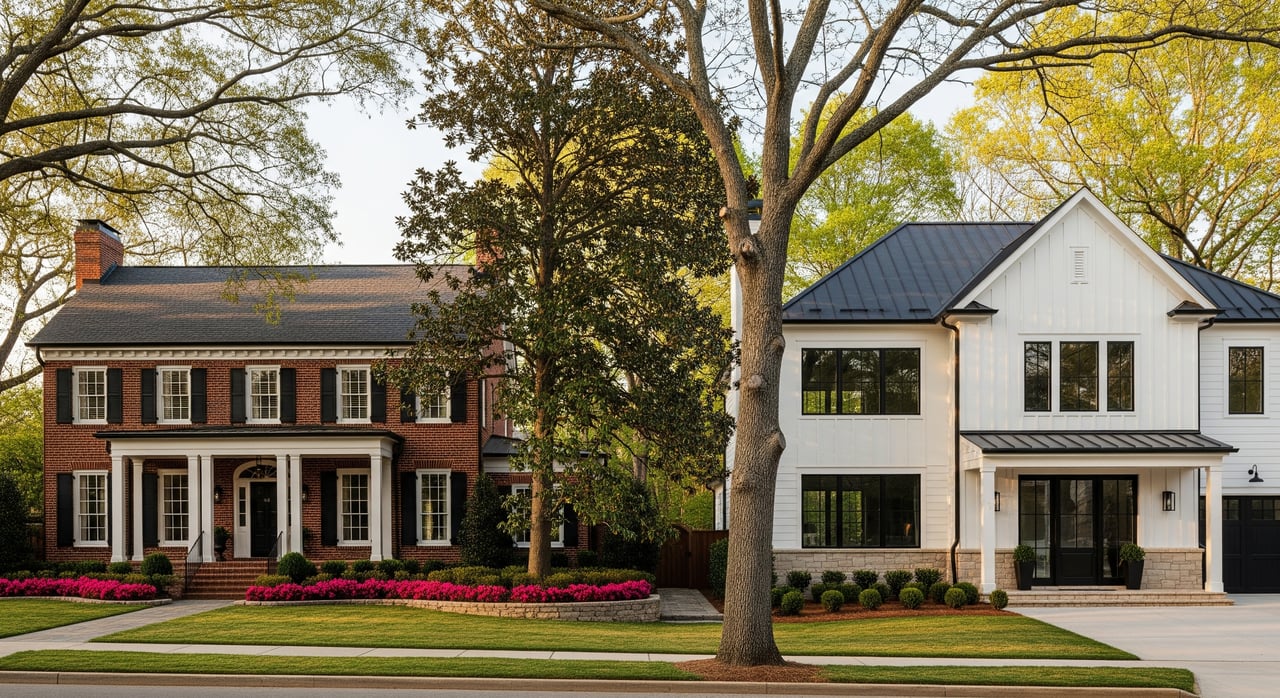
Are you torn between the shine of a brand-new home and the character of an established resale in the Raleigh suburbs? You’re not alone. Many buyers in Wake County weigh budget, commute, and convenience before deciding. In this guide, you’ll learn the key trade-offs on location, timelines, costs, warranties, financing, and HOAs so you can choose with confidence. Let’s dive in.
Raleigh suburbs at a glance
If you want new construction, you’ll often find it on the suburban fringe where there is room for larger communities. Around Raleigh, that includes growing areas near towns like Cary, Apex, Holly Springs, Wake Forest, Garner, Knightdale, Rolesville, and Clayton. These areas tend to offer brand-new layouts and planned amenities.
Resale homes are typically closer to long-developed corridors and established neighborhoods. You may see mature trees, settled streetscapes, and existing retail and services nearby. School boundaries in these areas are already set and documented by local districts.
Keep in mind that new-build communities may be farther from existing shopping and services at first. Local retail, roads, and schools often follow as growth continues. Always cross-check commute times, current amenities, and planned public projects before you decide.
Timeline and process
New construction schedule
The new-build journey runs in phases: reservation or pre-sales, contract, plans and permits, construction, pre-walk and punch list, final inspection and certificate of occupancy, then closing. Timing depends on whether you choose a quick-delivery spec home or build from a lot. A spec home can be ready within weeks, while a build-to-order plan often runs several months, sometimes 4 to 12 months or more.
Expect deadlines for selections and upgrades. Builders usually have set policies for change orders that can affect both cost and schedule. Clarify deposit requirements, what happens if you cancel, and who controls the construction timeline.
Resale closing rhythm
Resale transactions are more standardized. Once your offer is accepted, you move through inspections and other contingencies, appraisal and lending, then closing. Typical closings often occur within 30 to 60 days after contract, depending on the market and your financing.
Inspection findings are a key negotiation point. You can often request repairs or credits within contingency timelines. Your agent will help you navigate those deadlines so you stay protected and on track.
Costs today and over time
Upgrades vs. renovations
With new construction, the base price rarely includes everything you see in a model home. Structural options, lot premiums, kitchen and bath finishes, and HVAC upgrades are common add-ons. Builders may price upgrades higher than what a private contractor might charge later, but you gain the benefit of move-in readiness and the ability to finance those choices into your mortgage.
With resale, you can buy and renovate on your schedule. You can gather competitive bids, source materials, and phase work to fit your budget. If you plan major updates, ask your lender about renovation-friendly mortgages such as FHA 203(k), Fannie Mae HomeStyle, or other conventional renovation products.
Maintenance and efficiency
New homes typically offer lower immediate maintenance because the systems and appliances are new. You also benefit from current building codes that can improve energy efficiency. Early costs may include landscaping, seeding, or exterior touch-ups as the property settles.
Resale homes can need near-term capital items depending on age, such as roof, HVAC, windows, or water heater. A thorough inspection and realistic reserve plan help you budget properly. Weigh the total move-in costs for both paths, not just the purchase price.
Warranties, inspections, and risk
Builder warranties can be a major plus with new construction, but terms vary by builder. Many offer coverage on workmanship and systems, and a limited structural warranty. Get the scope and duration in writing, including what counts as normal settling, response times for service requests, and how disputes are handled.
Even with warranties, commission independent inspections. If permitted, schedule pre-drywall and final inspections to catch issues early. Confirm builder policies on inspector access and timing.
Resale buyers rely on standard home inspections that assess visible structure and systems. Your inspector may recommend specialists for roofing, HVAC, pest, septic, or other areas. The upside is clarity about current condition and maintenance history when records are available, though older systems may create higher near-term repair risk.
Financing, incentives, and negotiation
New builds can involve different financing. Some builders prefer you use a designated lender and may offer incentives in return, such as closing cost help, interest rate buy-downs, or appliance packages. Spec homes or unsold inventory can be good targets for incentives. Price reductions may be less common than in private resale negotiations, so incentives and upgrades are often the main lever.
Appraisals for new construction may rely on limited comparable sales if the neighborhood is brand new. That can create appraisal risk if values are still developing. Ask your lender and agent how to prepare for potential gaps.
Resale transactions usually use standard mortgage products with more predictable timing. You may negotiate price, inspection credits, and repairs depending on market conditions. Appraisals in established areas often have more comparables, though hot markets can still produce gaps.
HOA, covenants, and amenities
Many new communities launch with a homeowners association from day one. Expect rules, design guidelines, and assessments that can change as amenities come online. Some associations start with developer control, then transition to homeowners. Fees can ramp up, and special assessments are possible if budgets fall short.
In established neighborhoods, you can review a longer HOA history. Look for covenants, budgets, reserve studies, meeting minutes, and any planned assessments. This gives you a clearer picture of rules, fees, and reserves before you buy.
How to choose what fits you
Consider your priorities across four buckets.
- Location and lifestyle: Do you want a newer community that may be farther from existing retail and services today, or an established neighborhood with settled amenities and commute patterns?
- Timeline and flexibility: Are you on a strict move-in schedule, or can you plan around a longer new-build calendar or a post-closing renovation?
- Total cost of ownership: Are you willing to pay for bundled upgrades up front to avoid disruption, or would you rather manage renovations for potential cost savings over time?
- Risk and protection: Do you prefer builder warranties and new systems, or are you comfortable budgeting for older systems with the help of inspections and service records?
Before you decide, review local sources such as Wake County property and GIS maps, municipal planning departments for approved or planned development, and school system sites for current assignment details and any planned school openings. This helps you assess commute times, infrastructure plans, and community growth.
Questions to ask before you commit
Ask builders
- What exactly does the warranty cover, and for how long? Who administers it?
- Are independent inspections allowed? At which construction stages?
- What is the current contract-to-closing timeline for this plan and lot? What delays are common?
- What is included in the base price, and what are the costs for popular upgrades and lot premiums?
- What is the deposit schedule and refund policy if you cancel? Are there penalties?
- Are HOA documents available now? What are the current or expected fees and planned amenities?
- Which preferred lenders offer incentives, and what are the terms?
- Can you provide references from recent buyers and information on past warranty claims in Wake County?
Ask resale sellers
- How old are major systems like roof, HVAC, water heater, electrical panel, and plumbing? Are service records available?
- Were recent renovations permitted and inspected? Can you share permits and inspection records?
- Can I review HOA covenants, budgets, and meeting minutes if applicable?
- What is the pest and termite history, and have there been any water or foundation issues?
- What closing timeline do you prefer, and which items are negotiable, such as appliances, credits, or repairs?
Inspection and financing checklist
- For new homes: hire an inspector experienced with new construction for pre-drywall (if allowed) and final walkthroughs, and build a punch-list before closing.
- For resale: order a standard home inspection plus any specialist inspections your inspector recommends based on age and condition.
- Confirm lender requirements for appraisal, documentation, and certificate of occupancy if buying new construction.
- Ask lenders about renovation loan options if you plan updates after purchasing a resale.
Quick decision guide
- Choose new construction if you value predictable systems and warranties, prefer to finance upgrades into your mortgage, and can accommodate a longer or builder-driven timeline.
- Choose resale if you want proximity to established amenities, prefer more flexible negotiation, and are comfortable budgeting for updates or renovations on your own schedule.
Your next step in the Raleigh suburbs
Whether you’re leaning new or resale, the right advocate helps you compare total costs, manage timelines, and protect your interests from contract to close. If you are ready to map out neighborhoods, vet builders or sellers, and create a step-by-step plan, connect with Luz Ramirez Barraza for personalized guidance in Wake County’s suburbs.
FAQs
Will a new home cost more than a resale in Raleigh suburbs?
- It depends on lot premiums, what is included in the base price, and your upgrade choices, so compare total move-in costs, including any landscaping or immediate renovations.
Are builder warranties enough protection for new construction?
- Warranties are helpful but vary by builder, so get terms in writing, understand claim procedures, and still hire independent inspections at key build stages.
Can you negotiate with builders the same way you negotiate with resale sellers?
- Builder list prices can be less flexible, but you often can negotiate incentives, upgrades, or closing cost help, especially on inventory or spec homes.
Is a new home lower maintenance than a resale?
- New systems and materials can reduce immediate maintenance needs, though routine upkeep still applies and early landscaping or exterior work may be needed.
How should you compare locations across Raleigh suburbs?
- Weigh commute times, current and planned amenities, and school assignment details, and review municipal plans for future roads, retail, and community growth.
